The Enigmatic Red Panda: Fire-Coloured Cat of the Himalayas
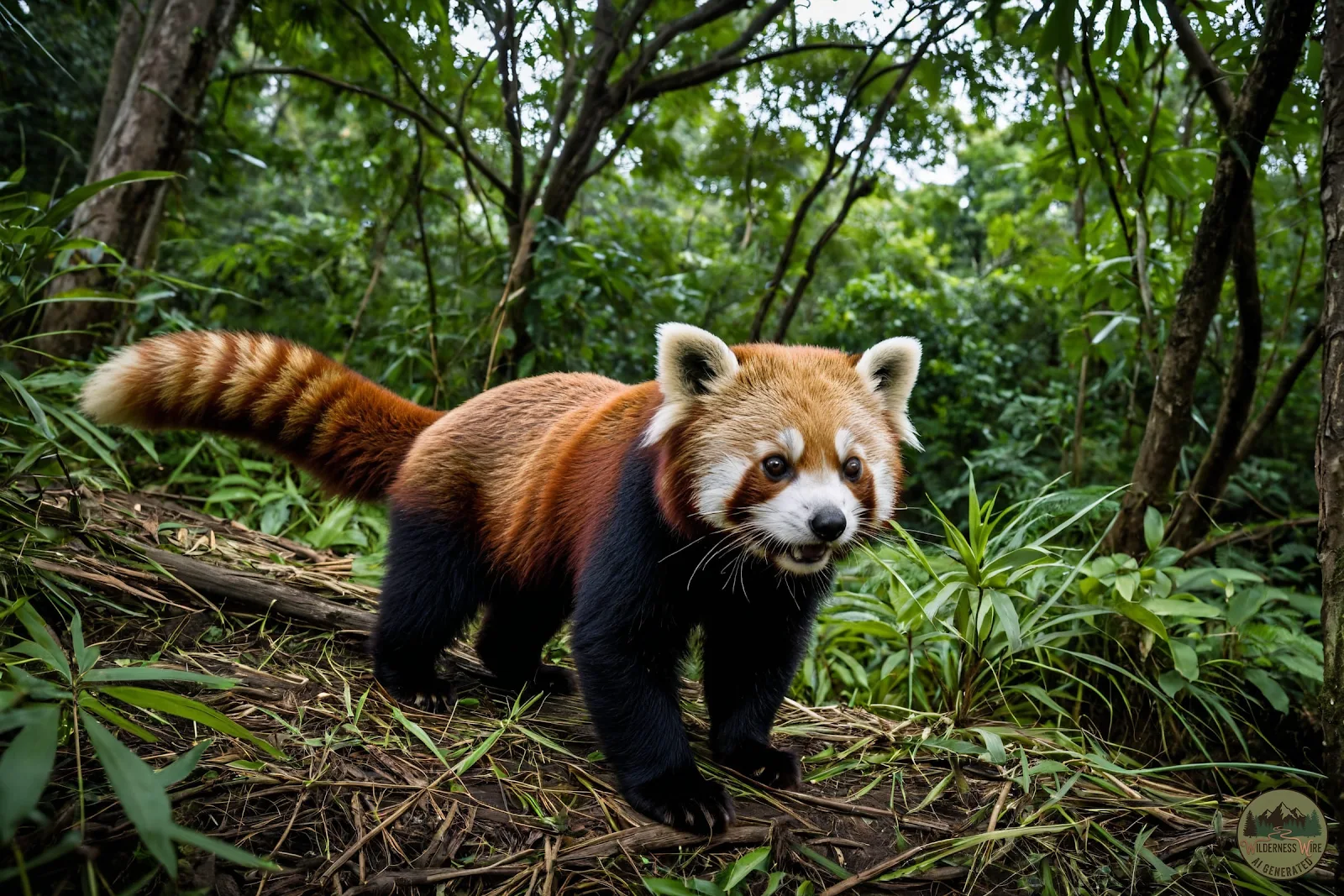
Frequently mistaken for a raccoon due to its masked face or a cousin of the giant panda due to its name, the red panda is actually the sole surviving member of the Ailuridae family. Living high in the misty canopy of the eastern Himalayas and southwestern China, its scientific name appropriately translates to "fire-colored cat." This striking tree-dweller acts as a vital indicator species for the health of high-altitude bamboo forests.
+------------------+---------------------------------------------------------+

| Feature          | Red Panda Profile                                       |
+------------------+---------------------------------------------------------+

| Scientific Name  | Ailurus fulgens                                         |
| Taxonomy         | Sole living member of the family Ailuridae              |
| Elevation Range  | 2,200 to 4,800 meters (7,200 to 15,700 feet)            |
| Diet             | Herbivorous omnivore (90%+ bamboo leaves and shoots)    |
| Specialized Tool | Radial sesamoid bone modified into a "false thumb"      |
| IUCN Status      | Endangered                                              |
+------------------+---------------------------------------------------------+
High-Altitude Evolution and Anatomy
Red pandas are meticulously engineered for an life spent entirely in the trees. Their luxurious, rust-colored fur matches the red lichens and mosses growing on Himalayan trunks, providing flawless camouflage.
To thrive in freezing temperatures at heights up to 4,800 meters, they utilize a suite of unique evolutionary adaptations:
- The "False Thumb": In a spectacular display of convergent evolution with the giant panda, the red panda features an extended wrist bone that acts as a false thumb. This modification grants them the dexterity to grip, strip, and manipulate slick bamboo stalks with ease.
- Rotatable Ankles: They are among the few mammals on Earth capable of climbing down a tree headfirst. This is made possible by hyper-flexible ankle joints and sharp, semi-retractile claws.
- The Tail Blanket: Their long, plush, ringed tail serves as a counterweight for balancing on razor-thin branches and double-functions as a built-in winter blanket to cover their faces while sleeping.
The Low-Energy Bamboo Diet
Though taxonomically categorized as carnivores, red pandas are behaviorally omnivorous with a heavy bias toward plants. Upwards of 90% of their diet consists exclusively of bamboo shoots and leaves. Because bamboo is incredibly low in nutrients, red pandas must spend the vast majority of their waking hours foraging and consuming massive quantities just to meet their daily caloric needs. When the seasons shift, they flexibly supplement their diet with nutrient-dense acorns, fruits, roots, insects, and bird eggs.
Solitary Shadows and Cub Development
Red pandas are strictly crepuscular and nocturnal, waking up to forage only during the dim hours of dawn, dusk, and midnight. Outside of the winter breeding season, adults live completely solitary lives, patrolling territories that they define using heavy scent-marking and an array of soft whistles, squeaks, and bird-like chatters.
Following a gestation period that can last up to 158 days, a female will give birth to a litter of one to four blind, helpless cubs in a hollow tree den. The mother raises the cubs entirely alone. The young remain hidden in the safety of the den for three months before emerging to spend up to a year learning vital canopy navigation and foraging skills from their mother.
The Fight for the Canopy
Today, the red panda faces an incredibly fragile future, with global wild populations dropping significantly. The International Union for Conservation of Nature (IUCN) classifies the species as Endangered due to several overlapping human pressures:
- Habitat Fragmentation: Commercial logging, livestock grazing, and agricultural clearing are slicing their native bamboo forests into tiny, isolated patches, preventing groups from interbreeding and lowering genetic diversity.
- Poaching and Pet Trade: Despite strict laws, they are still hunted illegally for their unique pelts—traditionally used to make hats in some regions—and captured for the black-market pet trade.
To counteract these threats, international conservation groups are establishing protected high-altitude national parks, implementing community-based forest monitoring in Nepal and Bhutan, and managing global zoo breeding programs to shield this ancient evolutionary lineage from extinction.