Majestic Red Deer: Ecology, Behavior, and Conservation
The Red Deer: Monarch of the Northern Wilderness
The majestic red deer (Cervus elaphus) stands as one of the largest and most iconic deer species on the planet. Evoking the untamed spirit of the wild, this resilient herbivore graces a massive territory across the Northern Hemisphere—stretching from the ancient, dense forests of Europe to the rugged mountains of Asia and the highlands of North Africa. Over millennia, the red deer has cemented its place as an ecological keystone, reshaping forest vegetation and serving as a vital food source for top predators.
+------------------+---------------------------------------------------------+

| Feature          | Red Deer Profile                                        |
+------------------+---------------------------------------------------------+

| Scientific Name  | Cervus elaphus                                          |
| Range            | Europe, Asia, and parts of North Africa                 |
| Shoulder Height  | Well over 1 meter (3.3+ feet)                           |
| Weight           | Upwards of 200 kilograms (440+ pounds) for mature stags |
| Diet             | Flexible herbivores (grasses, sedges, leaves, and bark) |
| Behavior         | Crepuscular (most active at dawn and dusk)              |
+------------------+---------------------------------------------------------+
A Visual Icon: Crowns and Camouflage
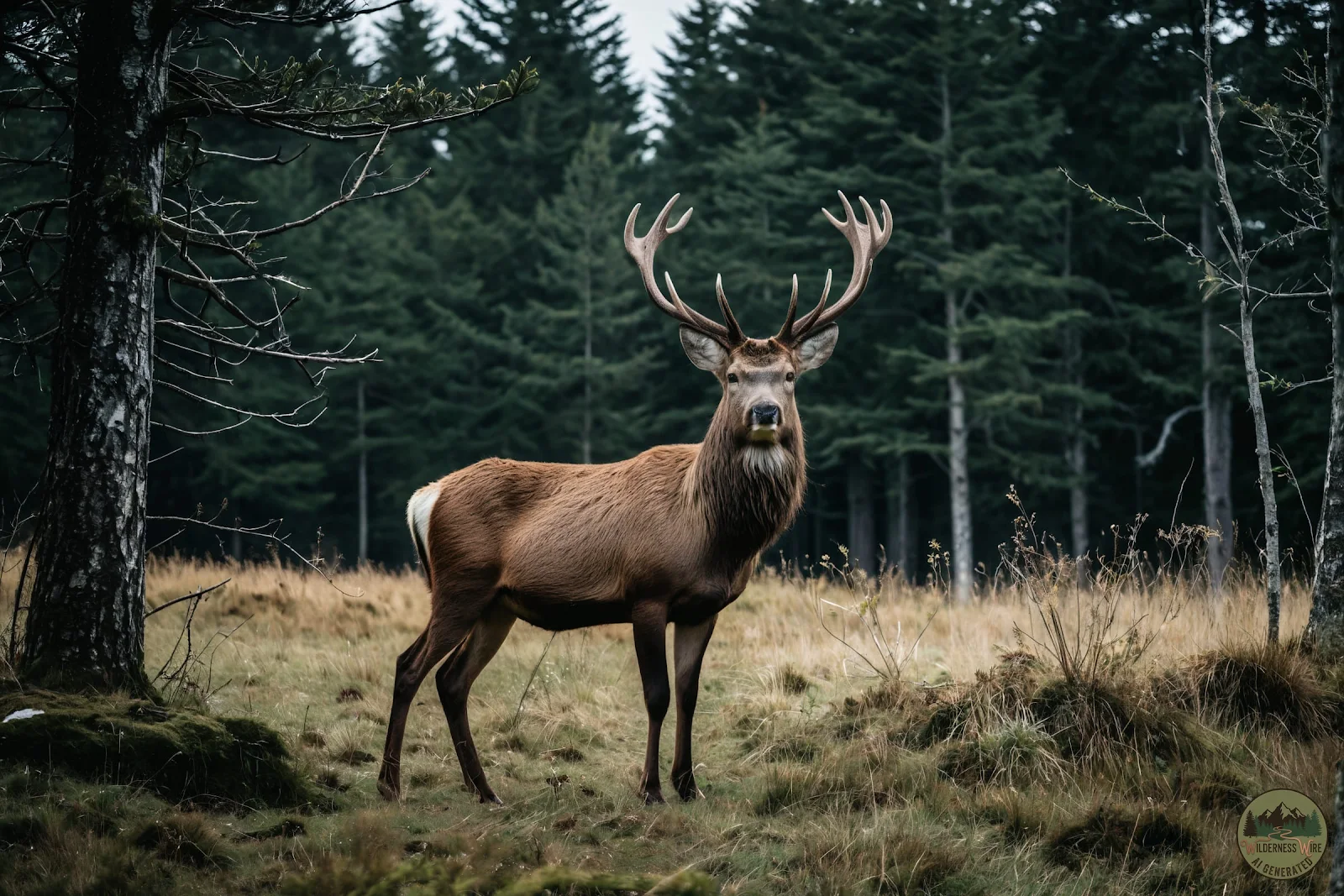
The red deer is instantly recognizable by its powerful build and seasonal wardrobe. During the summer, it sports a rich, vibrant reddish-brown coat. As winter approaches, this fur transitions to a muted greyish-brown, providing excellent camouflage against sparse woodland backdrops. A prominent, pale rump patch—distinctively lacking a black border—separates it from other large deer species.
The species showcases dramatic sexual dimorphism, meaning males and females look strikingly different:
- The Stags (Males): Considerably larger and heavier than females, a mature stag can weigh over 200 kilograms. Their most breathtaking feature is their magnificent antlers. Grown and shed annually in an energy-intensive process driven by testosterone, these bone structures feature multiple points or "tines." They serve as the ultimate indicator of a stag's health, age, and genetic strength.
- The Hinds (Females): Smaller, graceful, and naturally hornless, hinds focus their energy on herd survival and raising the next generation.
The Dynamics of the Herd and the Autumn Rut
For most of the year, red deer live segregated lives. Hinds and their offspring form large, matriarchal herds that offer safety in numbers and allow older females to pass down crucial foraging routes. Stags, on the other hand, peacefully cohabitate in smaller bachelor groups, spending their days grazing to build up fat reserves.
This peaceful separation shatters during the autumn rut—the breeding season. The forest air fills with deep, resonant roars as stags challenge rivals and advertise their fitness to nearby hinds. When vocal warnings fail, stags lock antlers in fierce displays of raw power to establish a strict pecking order.
Adaptable Eaters and Forest Architects
Red deer are highly adaptable mixed feeders. In the lush summer months, they graze on succulent grasses and herbs. When winter strips the landscape, they easily pivot to browsing on tough tree bark, woody shoots, and shrubs.
Because of this dietary flexibility, high densities of red deer can dramatically alter their environments by preventing certain tree species from regenerating. As a result, modern wildlife conservation heavily focuses on managing deer populations to keep the surrounding forest ecosystems healthy and biodiverse.
Life Cycle and Modern Conservation
Following an eight-month gestation period, hinds give birth to a single calf in late spring. Newborns feature a beautifully spotted coat that mimics the dappled light of the forest floor, keeping them invisible to predators. Though calves can stand within hours, the mother keeps them hidden for the first few weeks, returning only to nurse to avoid leaving a scent trail. Calves stay close to their mothers for up to two years to learn essential survival skills.
While global populations are robust, red deer face ongoing modern challenges, including habitat fragmentation from human expansion, poaching, and localized diseases. Today, regulated hunting and the preservation of large, interconnected wildlife corridors ensure that this resilient, breathtaking species continues to rule the northern wilderness for generations to come.