The Reedbuck: Graceful Antelope of African Grasslands and Mountains
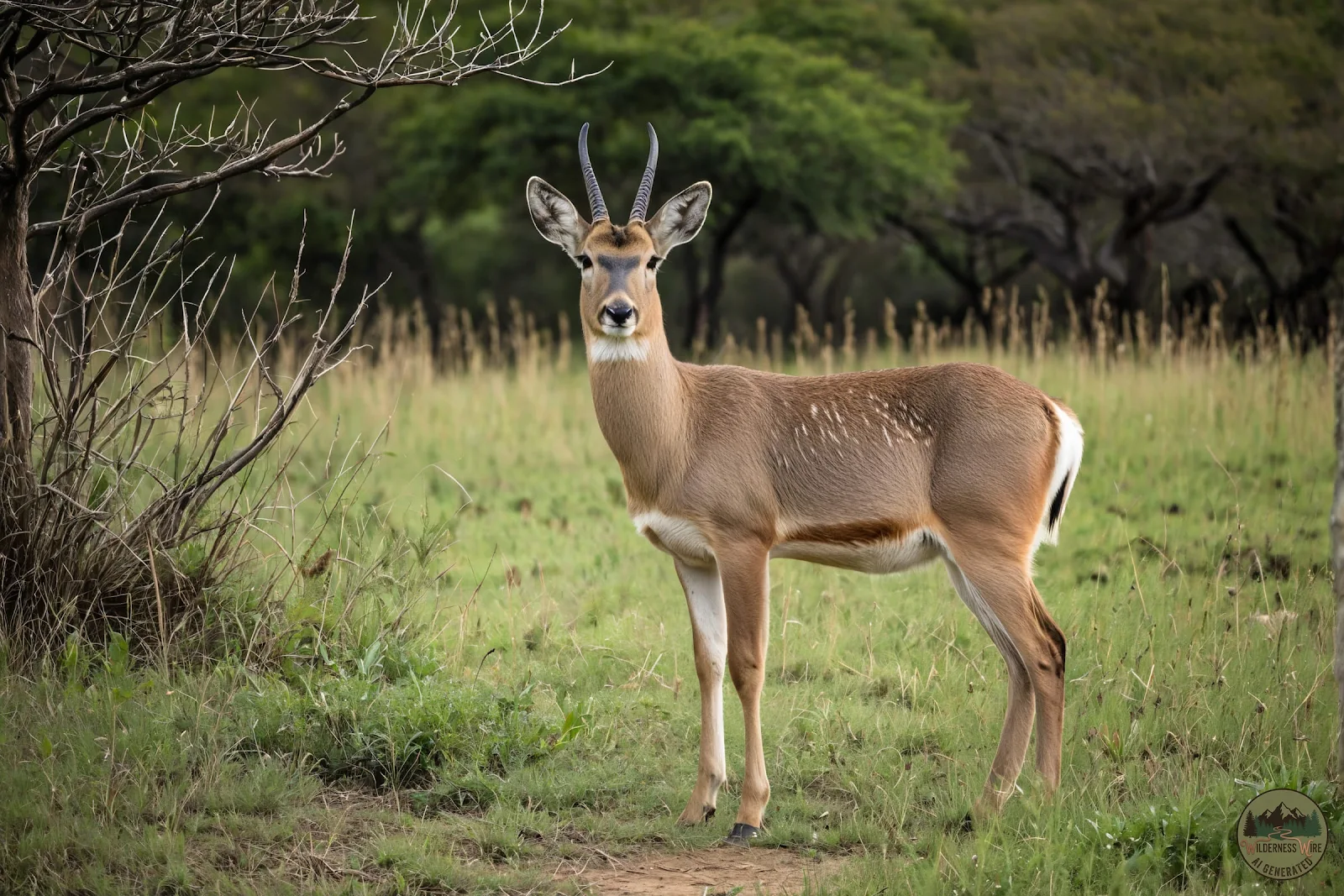
The genus Redunca operates via three highly specialized ecological variants. By segmenting their habitats, they completely avoid competing with one another for resources:
- Variant A: The Southern/Common Reedbuck (R. arundinum)
- Weight Class: Heavyweight (45–90 kg)
- Terrain: Lowland permanent wetlands, riverbanks, and dense reed beds.
- Visual ID: Sandy-brown coat with sharp, dark vertical racing stripes running down the front of the forelegs.
- Variant B: The Bohor Reedbuck (R. redunca)
- Weight Class: Middleweight (30–60 kg)
- Terrain: Open, sweeping savannas and seasonal marshes across Central and West Africa.
- Visual ID: Fine-boned, warm reddish-brown coat with highly pronounced, inward-hooking horn tips.
- Variant C: The Mountain Reedbuck (R. fulvorufula)
- Weight Class: Lightweight (30–50 kg)
- Terrain: Broken, rocky scree slopes and alpine grasslands above 1,500 meters.
- Visual ID: Thick, insulation-grade gray coat tailored for high-altitude thermal drop.
BIO-MECHANICAL CAPABILITIES & DEFENSE SCRIPTS
When dealing with apex predators, the reedbuck relies on a highly calculated, multi-tiered defensive program:
- Passive Stealth (The Freeze): Utilizing advanced color-matching camouflage, the reedbuck drops its chassis flat into tall grass. It stays entirely motionless, allowing predators to pass within mere inches undetected.
- Active Escape (The Rocking Horse Sprints): If flushed, it activates an explosive bounding run known as a "stot" or "pronk." It throws all four hooves into the air simultaneously in a series of stiff-legged, high-altitude bounds designed to navigate thick, tangled marsh vegetation at maximum velocity.
- The Beacon Signal (Visual Flash): During mid-flight, the reedbuck erects its short, bushy tail, flaring a bright white underside. This acts as a high-visibility optical tracking beacon for its calves and partner to follow through dense brush.
PROTOCOLS & DAILY OPERATIONS
- Operating Hours: Crepuscular Shift. The reedbuck restricts high-energy foraging to the dim, cool hours of dawn and dusk. Midday peak heat is spent completely offline, hidden in heavy cover ruminating.
- Resource Dependence: High H₂O Requirement. Unlike desert-adapted antelopes, the reedbuck has a strict physiological command to ingest free water daily. They are tethered to permanent water matrices, making their presence a definitive indicator of a healthy, perennial wetland ecosystem.
- Social Architecture:
- Lowland Variants: Highly localized. They operate in strictly monogamous pairs or tiny family nuclei (1 male, 1–2 hinds, and offspring).
- Mountain Variants: Aggregated. They form larger, highly vigilant defensive grids consisting of up to a dozen hinds overseen by a single dominant male.
THREAT ANALYSIS & CONSERVATION STATUS
- The Scent Grid: Dominant males fiercely safeguard territories spanning several square kilometers. They lay down boundaries by rubbing a highly specialized, bare glandular patch located directly below the ear against foliage, reinforced by strategic dung drops.
- Vocal Alarm Intercept: When a boundary is breached by a predator, the reedbuck forces a sharp blast of air through its nostrils, producing a piercing, high-frequency whistle. This serves as a universal ecosystem siren, alerting not only its own kind but all surrounding wildlife.
- Systemic Vulnerability: While the Common and Bohor variants are globally secure (Least Concern), the Mountain Reedbuck is experiencing severe fragmentation and is classified as Near Threatened. Rapid agricultural expansion, livestock overgrazing, and illegal bushmeat poaching are systematically dismantling the wet corridors this genus requires to survive.