Reedbucks: Graceful Antelopes of Africa's Wetlands
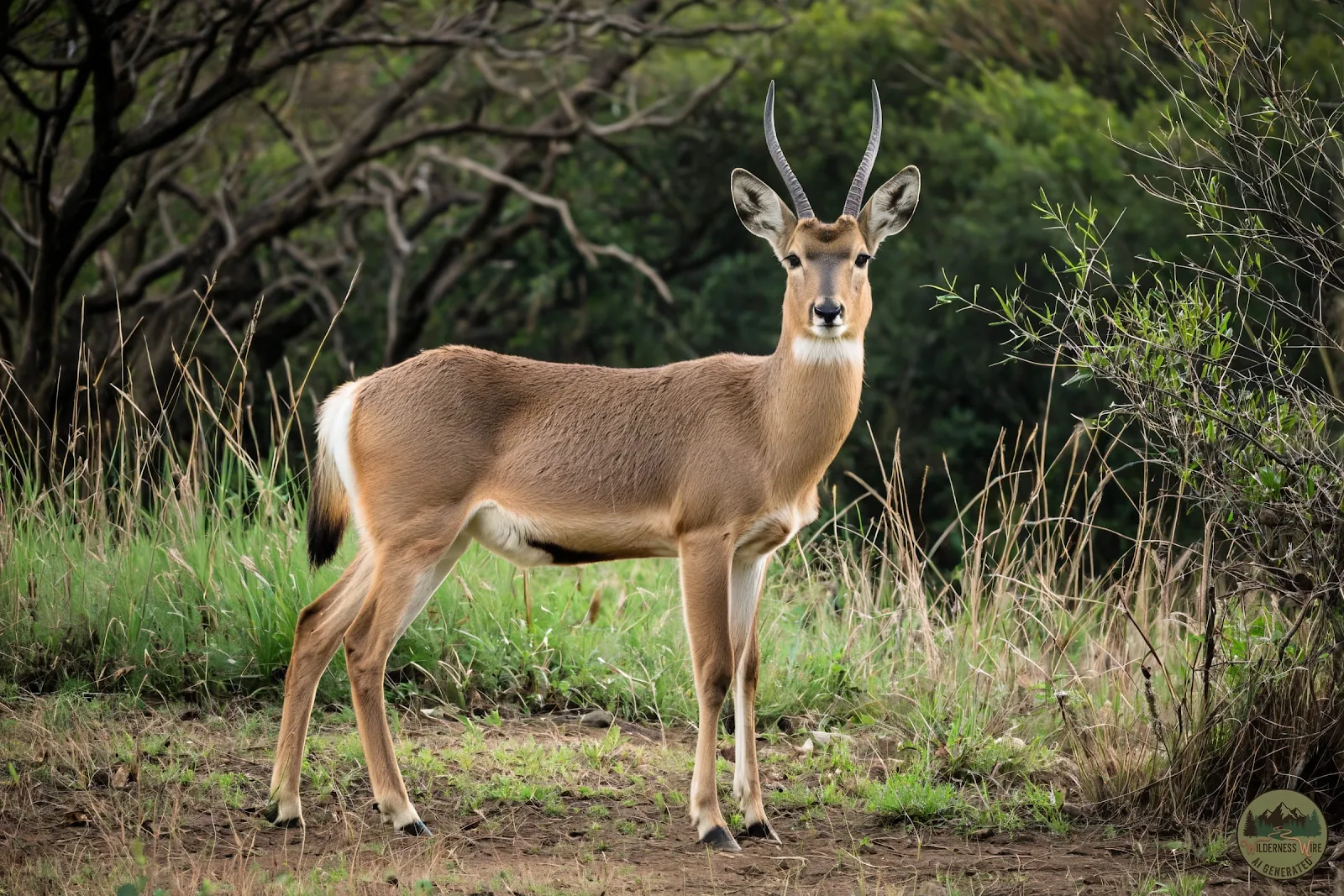
The Southern Reedbuck (Redunca arundinum) is the largest of the three species and perfectly embodies the elegance of its lineage. Cloaked in a striking reddish-brown coat, it blends seamlessly into the tall, sun-baked grasses of its home.
Key physical indicators include:
- Bold Highlights: A brilliant white underside extends from its throat all the way to its belly and inner thighs, contrasted sharply by a distinct dark streak running down the front of each foreleg.
- The Forward Crown: Only the males carry horns, which are heavily ringed and grow up to 35–45 centimeters. They curve gracefully forward from the base before hooking sharply backward at the tips, serving as a primary tool for territorial defense. Females are entirely hornless.
Dawn Hunters and the "Rocking Horse" Sprint
Reedbucks are strictly crepuscular, concentrating their feeding and moving during the cool hours of dawn and dusk. This schedule keeps them out of the blistering midday heat and offers protection from daytime predators. During the day, they drop flat into tall reeds, remaining completely motionless until a predator is practically stepping on them.
When forced to flee, they burst into a spectacular "rocking horse" bounding gait. As they leap, they flick up their bushy tails to flash a bright white underside and emit a loud, shrill whistle. This high-frequency alarm call cuts through the landscape over massive distances, instantly alerting nearby family units of impending danger.
Selective Diet and Harem Dynamics
Reedbucks are specialized grazers that subsist almost entirely on fresh, nutrient-dense grasses. While they can survive short periods without drinking by absorbing moisture directly from their food, they prefer to stay close to reliable water sources, frequently visiting waterholes during the hottest hours of the day.
Their social structure centers on small, territorial family groups made up of a dominant male, one or two females, and their recent offspring. Solitary males guard these territories fiercely, marking boundaries with specialized scent glands located below their ears and strategic dung piles.
Mating occurs year-round. Following a seven-and-a-half-month gestation period, a single calf is born. The mother utilizes a strict "hider" strategy, secreting the newborn away in thick, dense vegetation for several weeks and returning only to nurse to keep the calf entirely scentless to predators.
The Conservation Reality
While the Southern and Bohor Reedbucks are currently listed as "Least Concern" by the IUCN due to stable populations in protected reserves, they face intensifying human pressure. The Mountain Reedbuck is classified as "Near Threatened" in several regions due to its highly restricted, fragmented alpine habitat.
Across all species, rapid agricultural expansion, urbanization, and cattle ranching continue to shrink the vital wetlands they rely on. Protecting these elegant antelopes is crucial not just for the species themselves, but for preserving the rich biodiversity and ecological health of Africa's wild aquatic systems.