Reedbucks: Emblems of Grace and Adaptation in Africa
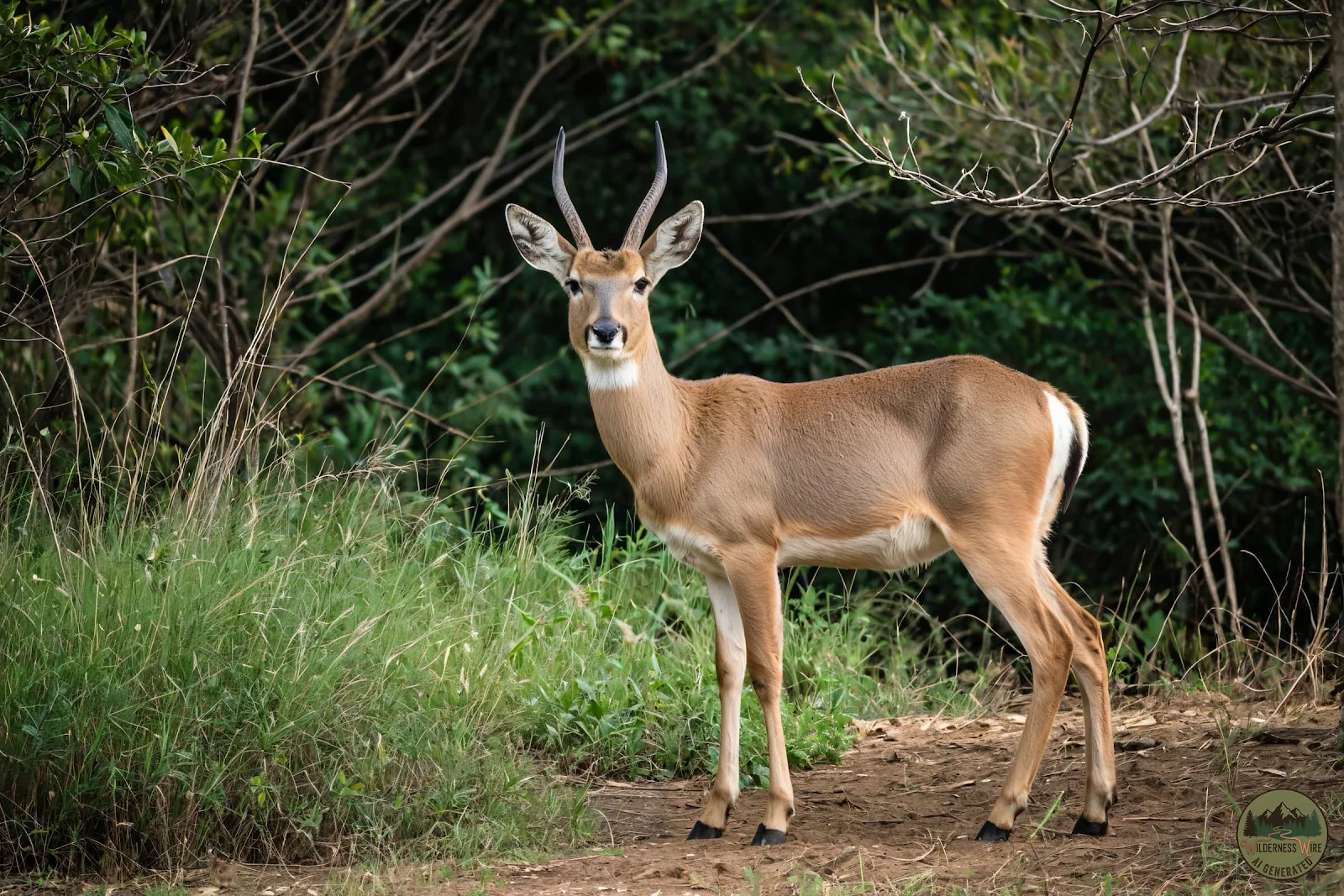
While sharing a core genetic blueprint, the three reedbuck species avoid direct competition by dividing up the African terrain:
- Common Reedbuck (Redunca arundinum): The largest and most robust of the trio, sporting a sandy-brown coat. It thrives in low, wet grasslands and floodplains. Males grow impressive, heavily ridged horns exceeding 40 centimeters.
- Bohor Reedbuck (Redunca redunca): Dominating the savannas of West and Central Africa, this mid-sized cousin features a warm, reddish-brown coat. Its horns curve sharply forward and hook slightly inward.
- Mountain Reedbuck (Redunca fulvorufula): A smaller, delicately built antelope cloaked in dark, grayish-brown fur. It entirely bypasses the lowlands to navigate high-altitude montane grasslands and steep, rocky hillsides.
Engineered for Vigilance and Escape
Every physical trait of the reedbuck is fine-tuned for survival against a brutal gauntlet of predators, including lions, leopards, cheetahs, hyenas, and African wild dogs.
- The Flash Alarm: When a predator approaches, a reedbuck’s first line of defense is to freeze, relying on its coarse, shaggy coat to blend perfectly into the tall grass.
- The Whistle and Stot: If detected, the antelope bursts into action. It launches into a "stot" or "pronk"—a spectacular, stiff-legged leap with all four hooves leaving the ground simultaneously. As it bounds, it flares a bright white patch under its tail to act as a visual beacon for its herd and emits a piercing, high-pitched whistling alarm call that echoes over massive distances.
- Scent Communication: They feature prominent glandular patches on their faces, right below their eyes, which they rub against vegetation to mark territories.
Daily Rhythms and Hidden Beginnings
Reedbucks are highly selective herbivores that target the most succulent, nutrient-dense new grass shoots, reeds, and sedges. Because they have a strict daily dependence on water, their territories are always anchored near permanent water sources. To escape the blistering African heat and avoid daytime predators, they restrict their foraging to the cool hours of early morning and late afternoon, spending the middle of the day hidden in thick cover to ruminate.
Socially, mature males are solitary and fiercely territorial, defending patches of land spanning several square kilometers. Females and their offspring form separate, fluid family units of up to six individuals that travel freely across male borders.
Reproduction results in a single, precocial calf born after a seven-to-eight-month gestation period. The mother utilizes a calculated "hider" strategy, delivering her calf in dense brush and leaving it perfectly still for its first few weeks. She visits only to nurse, keeping the vulnerable newborn entirely scentless to passing jackals and caracals.