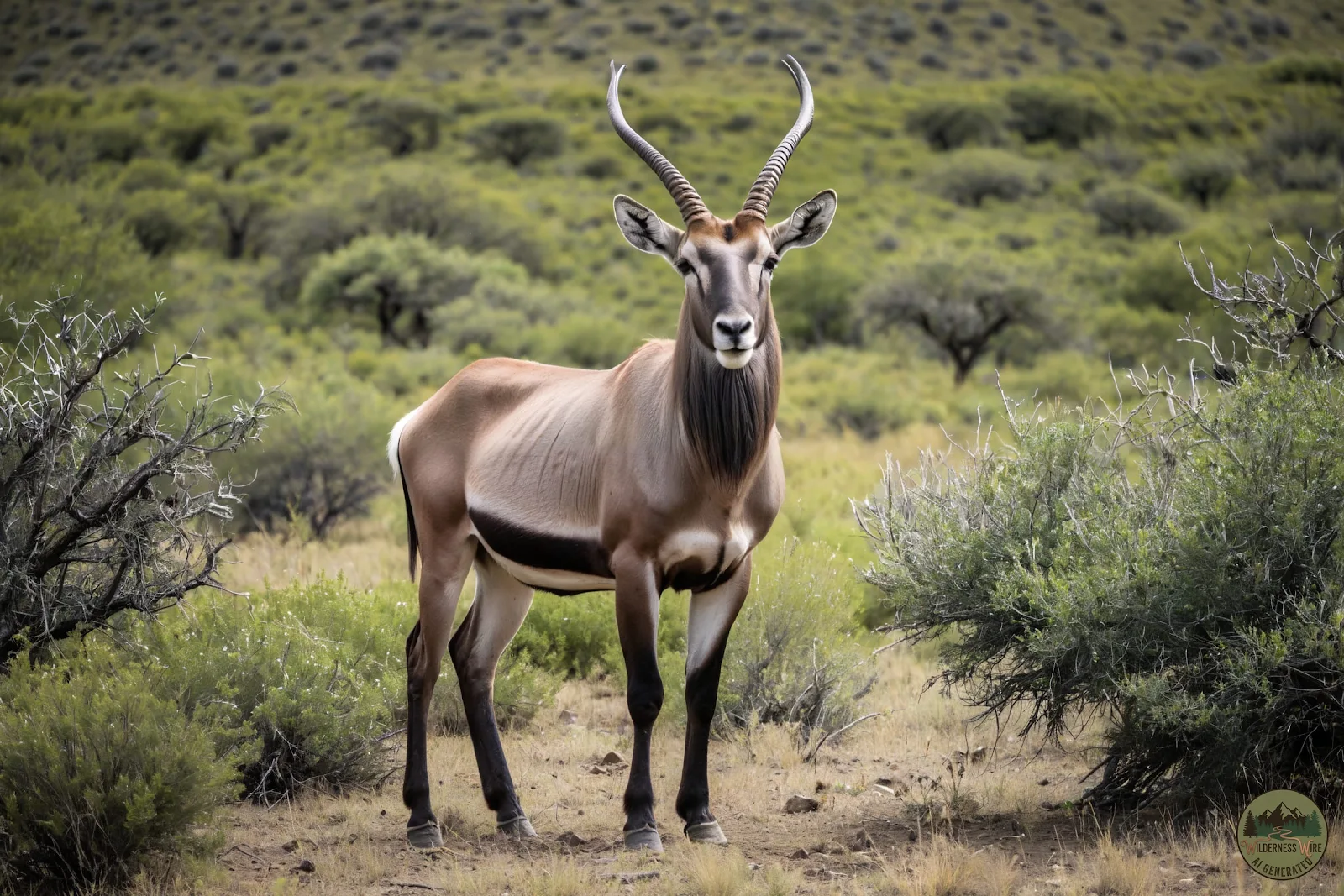
The African savanna is home to a spectacular array of wildlife, and among its most visually striking inhabitants is the Roan Antelope, a truly magnificent ungulate that commands attention with its imposing size and distinctive features. Named for the reddish-brown or "roan" colour of its coat, this antelope, scientifically known as *Hippotragus equinus*, is one of the continent's largest, rivaling even the mighty Sable Antelope in stature. Its presence in the landscape is not merely ornamental; the Roan plays a significant ecological role, navigating a complex social structure within its preferred habitats.
Characterized by a robust build, the Roan Antelope can stand over 1.5 meters (5 feet) at the shoulder and weigh up to 300 kilograms (660 pounds). Both sexes possess impressive, heavily ringed horns that curve gracefully backward in a scimitar-like arc, sometimes reaching lengths of over a meter. While present in both males and females, the bull's horns tend to be thicker and more pronounced. What truly sets the Roan apart, however, is its remarkable facial mask: a striking pattern of black and white markings that resembles a highly stylized warpaint. This mask, along with its long, tufted ears, gives it an almost regal and somewhat fierce countenance, a fitting reflection of its often spirited disposition.
Roan Antelopes are primarily grazers, preferring areas of medium-to-tall grasslands and open woodlands that are well-watered. Their distribution across sub-Saharan Africa is wide, stretching from West Africa to parts of East and Southern Africa, though their populations have become increasingly fragmented and localized due to habitat loss and human encroachment. They are selective feeders, preferring certain species of grass and avoiding very short pastures, which influences their movements and coexistence with other grazing herbivores like wildebeest and zebra, who often favor shorter grasses. This dietary niche helps to maintain the biodiversity of the savanna, preventing the overgrazing of particular grass types.
Socially, Roan Antelopes typically live in small herds comprising a dominant bull, several females, and their offspring, often numbering between 5 and 20 individuals. These "harem" groups are tightly knit, with the dominant male fiercely defending his territory and his females from rival males. Bachelor herds, consisting of younger or non-dominant males, also exist and often roam the periphery of established territories, waiting for an opportunity to challenge for dominance or find a vacant range. Communication within herds involves various vocalizations, including snorts and bellows, as well as body language such to signify alertness or submission.
Reproduction in Roan Antelopes follows a seasonal pattern, often coinciding with periods of abundant rainfall and lush grazing. After a gestation period of approximately nine months, a single calf is born. The newborn calf is initially hidden by its mother in dense cover, where it remains for several weeks, vulnerable to predators. During this critical time, the mother visits only for nursing, keeping her scent away from the hiding place. This strategy helps to minimize the risk of predation until the calf is strong enough to join the herd and keep pace with the adults. Calves exhibit a distinctive light brown coat that offers camouflage, gradually developing the adult's characteristic roan color as they mature.
Despite their imposing size and formidable horns, Roan Antelopes are not immune to predation. Lions, leopards, hyenas, and African wild dogs are their primary natural enemies, especially targeting the young and infirm. When threatened, Roans will often stand their ground, forming a defensive line or semi-circle, presenting their sharp horns to the attacker. While they can run at considerable speed, their preferred defense is often confrontation rather than flight, using their strength and weaponry to deter predators. Their aggressive nature, especially that of a protective bull, can make them dangerous adversaries for even large carnivores.
Conservation challenges for the Roan Antelope are multifaceted. While classified as 'Least Concern' globally by the IUCN, many regional populations are in decline or have faced local extinction. The primary threats include habitat loss and fragmentation dueuded to agricultural expansion, human settlement, and infrastructure development. Poaching for their meat and impressive horns also poses a significant risk in certain areas. Furthermore, diseases, particularly historical outbreaks of rinderpest, have decimated populations in the past. Efforts to protect this species involve safeguarding large tracts of their natural habitat, establishing protected areas, and implementing anti-poaching measures. Understanding their specific grazing requirements and social dynamics is crucial for effective conservation strategies, ensuring that protected areas can sustain viable populations.
The Roan Antelope is more than just another large mammal on the savanna; it is an emblem of the wild, embodying the intricate balance and raw beauty of its ecosystem. Its unique appearance, complex social structure, and adaptive behaviors provide a rich tapestry for scientific study and appreciation. By understanding and protecting these magnificent creatures, we not only safeguard a species but also contribute to the health and vitality of the broader African savanna, ensuring that future generations can witness the striking silhouette of the Roan Antelope against the backdrop of an African sunset.