The Takin: Exploring the Enigmatic Mountain Monarch and the Legendary Golden Fleece of Asia
Takin_00002_
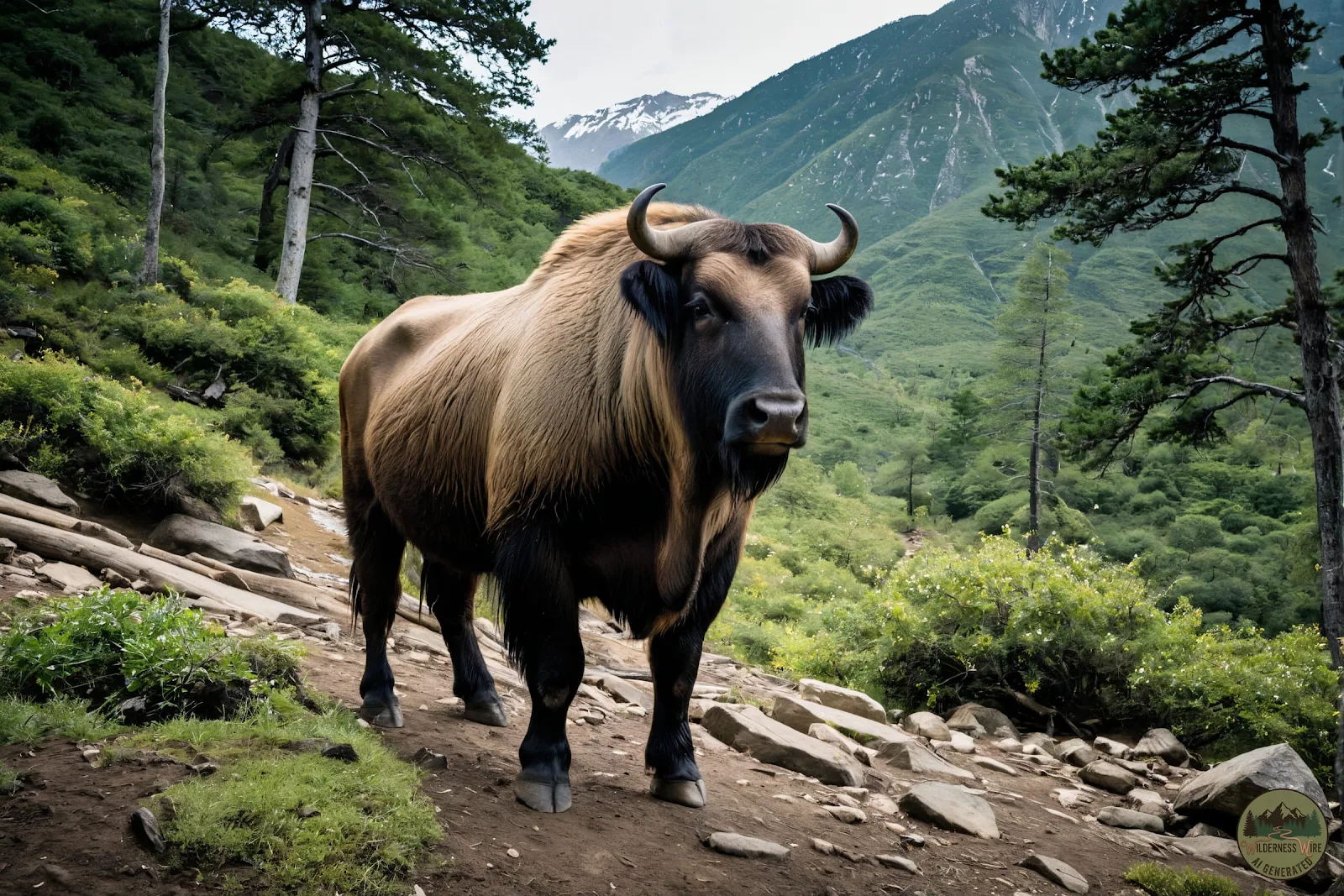
The Takin (Budorcas taxicolor) is perhaps one of the most enigmatic and physically distinctive ungulates found in the high-altitude regions of Asia. Often described by naturalists as a "taxonomic curiosity," this heavy-set goat-antelope appears as if it were assembled from the parts of several different animals. It possesses the arched bridge of a moose’s nose, the thick, powerful neck and sloping back of a bison, the stout legs of a bear, and the spiraling horns of a wildebeest. Despite its somewhat lumbering appearance, the Takin is a master of its vertical world, navigating the precipitous slopes of the Eastern Himalayas and the Tibetan Plateau with a grace that defies its 600-to-700-pound frame.
Native to the dense bamboo forests and rocky alpine meadows of Bhutan, China, India, and Myanmar, the Takin is the largest member of the Caprinae subfamily, which includes goats and sheep. While its appearance might suggest a closer relation to cattle or muskoxen, genetic and morphological studies place it firmly within the goat-antelope lineage. Evolution has sculpted this creature specifically for the harsh, oxygen-thin environments of the cloud forests. Its large, bulbous nose is not merely a cosmetic feature; it serves a vital physiological function. Large sinus cavities allow the animal to warm up the frigid mountain air before it reaches the lungs, preventing internal heat loss and ensuring efficient respiratory function in sub-zero temperatures.
One of the most remarkable physiological adaptations of the Takin is its integumentary system. The animal lacks sweat glands but instead secretes a pungent, oily substance through its skin. This oily film acts as a highly efficient, natural raincoat, protecting the Takin from the persistent moisture of the Himalayan mist and monsoons. This secretion is so potent that it often leaves a dark, greasy stain on the trees and rocks where the animals rub themselves. Beyond weatherproofing, these oils likely play a role in intraspecific communication, leaving scent markers that signal territory or reproductive readiness in the dense, low-visibility undergrowth of rhododendron and bamboo.
The Takin is categorized into four distinct subspecies based largely on geography and the color of their pelage: the Mishmi Takin, the Sichuan Takin, the Bhutan Takin, and the most visually striking of all, the Golden Takin. The Golden Takin, found primarily in the Qinling Mountains of China’s Shaanxi province, is widely believed to be the biological inspiration for the "Golden Fleece" of Greek mythology. Its coat carries a brilliant, metallic sheen that catches the sunlight, making it appear almost ethereal against the rugged mountain backdrop. This subspecies has become a national treasure in China, held in similar regard to the Giant Panda, and serves as a flagship species for the conservation of montane ecosystems.
Socially, Takins exhibit complex and seasonal behavioral patterns. During the summer months, they congregate in massive herds that can number up to 300 individuals. These gatherings usually occur at higher elevations where forage is abundant. As the weather turns and food becomes scarce, these large groups fracture into smaller bands of 15 to 20 individuals, predominantly composed of females and juveniles, which migrate to lower, more sheltered valleys. Mature bulls are often solitary, joining the herds only during the mid-summer rut. Their communication is a mixture of guttural bellows, sharp alarm snorts, and the aforementioned scent marking, creating a sophisticated social fabric that allows them to thrive in treacherous terrain.
The diet of the Takin is that of a generalist herbivore, though they show a marked preference for bamboo shoots and deciduous leaves. They are known to stand on their hind legs—reaching heights of up to eight feet—to browse on higher foliage, a behavior rarely seen in animals of their weight class. This adaptability is key to their survival in a landscape where food sources can be buried under snow for months. They also frequent mineral licks, which are essential for neutralizing toxins found in some of the alpine plants they consume and for providing necessary salts that are otherwise absent in their high-altitude diet.
From a conservation perspective, the Takin faces significant challenges. They are currently listed as Vulnerable by the IUCN, primarily due to habitat fragmentation and poaching. Because they rely on seasonal vertical migration, the development of roads and human settlements in mountain valleys can cut off their access to wintering grounds. Furthermore, their specialized habitat makes them highly susceptible to the effects of climate change; as temperatures rise, the specific alpine zones they occupy may shrink or shift upward, forcing them into competition with other species or into areas with less cover from predators like leopards and wolves.
Efforts to protect the Takin have become a focal point for transboundary conservation initiatives in the Himalayas. In Bhutan, the Takin is the national animal and is protected with deep cultural reverence. In China, the creation of expansive nature reserves has helped stabilize some populations. However, the survival of the species depends on a holistic approach that preserves the integrity of the entire montane ecosystem. Understanding the Takin is not just an exercise in zoological curiosity; it is a window into the delicate balance of life in one of the most extreme environments on Earth. These "mountain monarchs" remain a symbol of the wild, untamed spirit of the high peaks, representing an evolutionary journey that has allowed life to flourish in the thin air above the clouds.