The Remarkable Biology and Conservation Journey of the Iconic Tasmanian Devil
The Tasmanian devil (Sarcophilus harrisii) stands as a biological marvel and a symbol of rugged survival. As the world's largest surviving carnivorous marsupial, it occupies a unique niche in the Australian ecosystem, specifically within the island state of Tasmania. Often misunderstood due to early colonial descriptions and modern popular culture, the devil is far more than a frenzied scavenger; it is a sophisticated predator and a vital component of the ecological health of its habitat. To understand this creature is to look into the complexities of marsupial evolution, the fragility of isolated populations, and the remarkable efforts of modern conservation science.
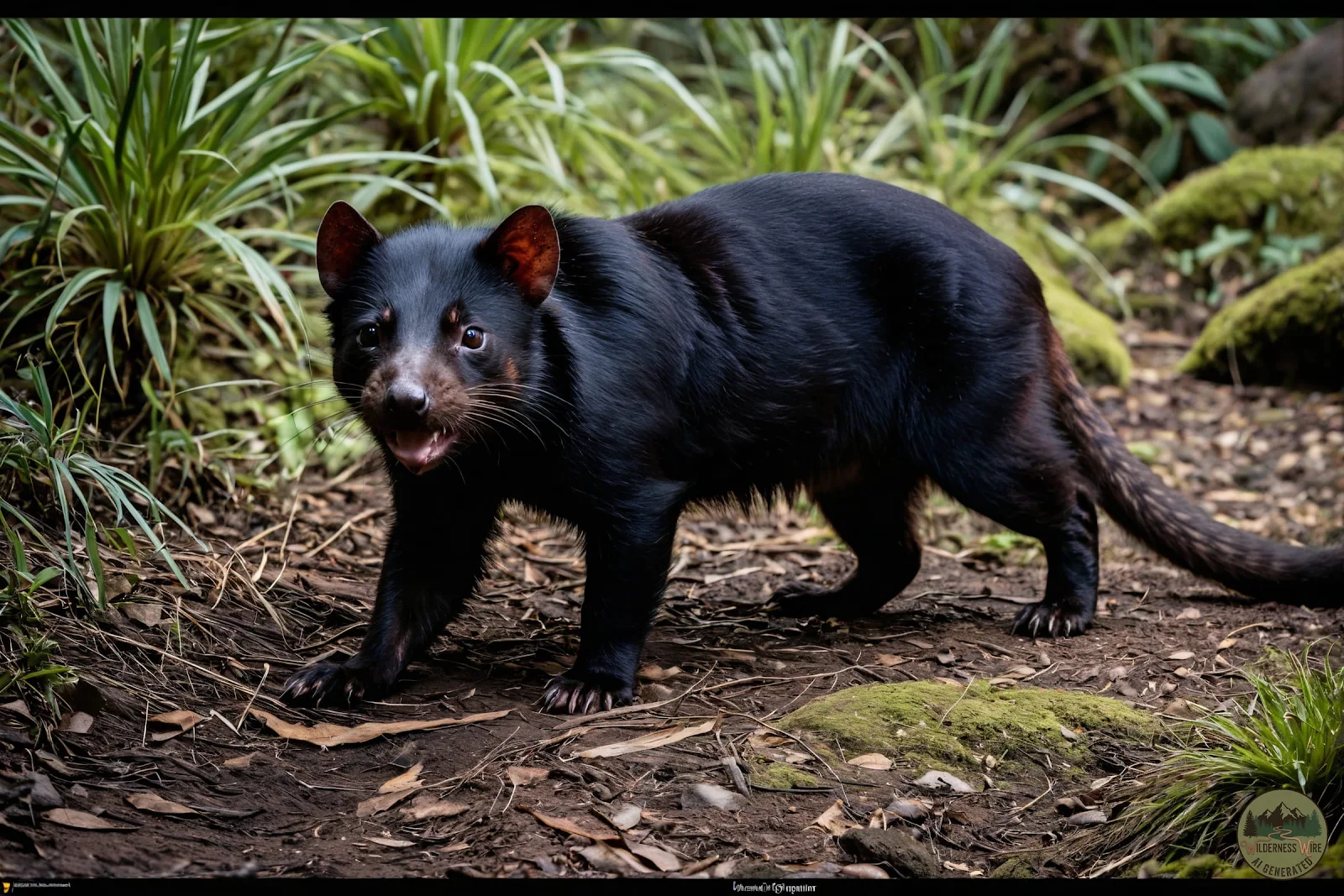
Taxonomically, the Tasmanian devil belongs to the family Dasyuridae, a group of carnivorous marsupials that includes quolls and the extinct thylacine. Its scientific name, Sarcophilus harrisii, translates roughly to "Harris's flesh-lover," named after George Harris, the naturalist who first described the animal in 1807. Physically, the devil is characterized by its stocky build, black fur, and distinctive white markings—usually a crescent on the chest and patches on the rump. These white markings are thought to distract predators or perhaps serve as a visual cue during social interactions in the low light of dusk and dawn.
One of the most remarkable physiological features of the Tasmanian devil is its bite force. While significantly smaller than a large canine or feline, the devil possesses a bite force-to-body mass ratio that is among the highest of any living mammal. This is facilitated by an exceptionally large head and powerful jaw muscles. Their dentition is specialized for bone-crushing; their molars are heavy and robust, allowing them to consume every part of a carcass, including bones, fur, and hide. This efficiency makes them the "cleaners" of the Tasmanian wilderness, preventing the spread of diseases and blowfly strikes by removing carrion from the landscape.
The devil's reputation for ferocity largely stems from its vocalizations and feeding behavior. When multiple devils gather at a large carcass, they engage in highly vocal communal feeding. The array of screams, growls, and snorts can be blood-curdling to the uninitiated, leading early European settlers to believe they were surrounded by demons in the bush. However, these displays are largely ritualized. They serve as a social hierarchy mechanism, allowing individuals to establish dominance and access food without necessarily resorting to physical combat that could result in debilitating injury. Their ears often turn a bright red during these encounters, a result of increased blood flow used for thermoregulation as the animal becomes physically excited.
Beyond their role as scavengers, Tasmanian devils are capable hunters. They are known to take down prey larger than themselves, including small wallabies and wombats, though they are opportunistic by nature. They are primarily nocturnal, using their keen sense of smell and sensitive whiskers to navigate the dark understory of Tasmania's diverse landscapes, which range from coastal scrub to dense rainforests and alpine heathlands. Their gait is a lumbering, awkward-looking trot, yet they are surprisingly fast and possess immense endurance, capable of traveling long distances in a single night in search of food.
The reproductive cycle of the Tasmanian devil is a testament to the unique biology of marsupials. Females give birth to up to 20 or 30 tiny, underdeveloped young after a gestation period of only about three weeks. However, the female only has four teats in her pouch. This creates a fierce biological competition immediately upon birth; only the first few to reach the pouch and latch onto a teat will survive. The young remain in the pouch for about four months, after which they are carried on the mother's back or left in a den while she hunts. By the time they reach six to nine months of age, they are fully independent, though the transition to adulthood is perilous, with high mortality rates in the first year.
In recent decades, the Tasmanian devil has faced an existential threat in the form of Devil Facial Tumor Disease (DFTD). This is a rare form of transmissible cancer—one of the few known in the animal kingdom—that is spread through biting during social interactions and mating. The disease causes large tumors around the mouth and face, eventually preventing the animal from eating. Since its discovery in the mid-1990s, the disease has decimated wild populations, leading to a decline of over 80% in many areas. This crisis spurred an international conservation effort, leading to the establishment of "insurance populations" on islands and in captive breeding facilities across Australia.
The conservation story of the Tasmanian devil is currently in a hopeful chapter. Researchers are seeing signs of evolutionary adaptation, with some wild populations developing genetic resistance to the tumors. Furthermore, a landmark reintroduction program recently returned Tasmanian devils to the Australian mainland for the first time in an estimated 3,000 years. By introducing them into fenced sanctuaries in New South Wales, conservationists hope to restore the ecological balance once maintained by native predators, potentially helping to control invasive species like red foxes and feral cats that have devastated small mammal populations on the mainland.
The Tasmanian devil is an emblem of the island’s wild heart. It is a creature of immense strength, social complexity, and ecological importance. While its name suggests a creature of malice, the reality is an animal of profound resilience that has survived the extinction of its larger relatives and is currently fighting its way back from the brink of a genetic catastrophe. Protecting the devil is not merely about saving a single species; it is about preserving the intricate web of life in one of the world’s last great wildernesses. As we continue to study their genetics and behavior, the Tasmanian devil remains a powerful reminder of the mysteries still held within the natural world and our responsibility to safeguard them.