The Majestic Tiger: Understanding the Biology and Conservation of the World's Most Iconic Cat
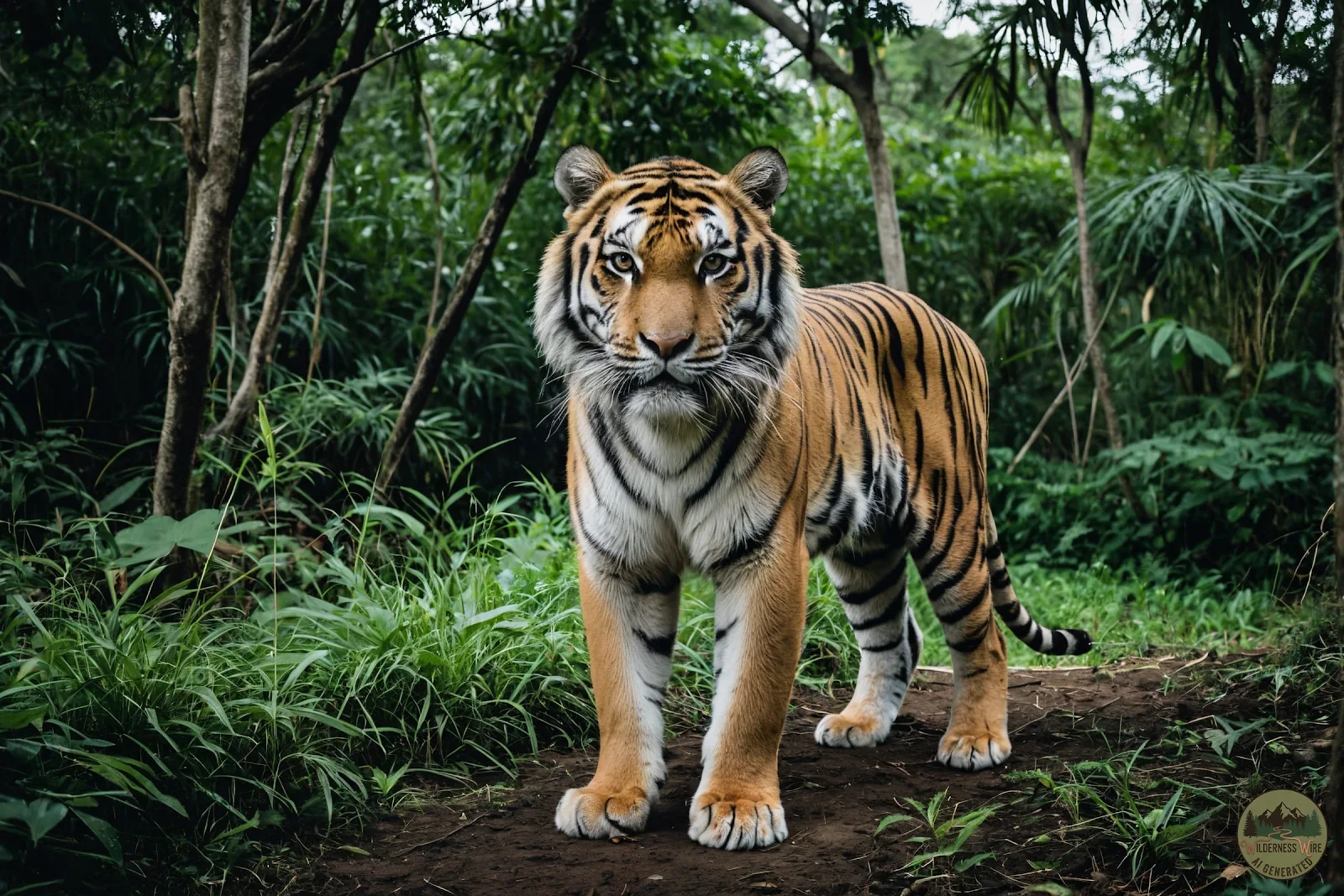
The tiger (Panthera tigris) stands as the largest extant cat species in the world and a member of the genus Panthera. Often recognized by its dark vertical stripes on orange-brown fur with a lighter underside, this apex predator is not merely a symbol of raw power but also a cornerstone of the ecosystems it inhabits. To understand the tiger is to understand the intricate balance of the Asian wilderness, spanning from the frozen forests of the Russian Far East to the humid mangrove swamps of the Sundarbans. As a flagship species, the health of tiger populations serves as a primary indicator of the health of the entire forest ecosystem. When tigers thrive, it indicates that the prey base is sufficient and the vegetation is lush enough to support a complex food web.
Evolutionarily, the tiger’s lineage diverged from other pantherine cats approximately 3.8 million years ago. Fossil evidence suggests that the earliest ancestors of the modern tiger appeared in East Asia during the Pliocene epoch. Over millennia, these creatures adapted to a staggering variety of climates. This adaptability led to the differentiation of several subspecies, though modern genetic analysis often groups them into two major clades: the continental tigers and the Sunda island tigers. Despite these classifications, all tigers share a fundamental biological blueprint designed for stealth, strength, and solo survival. Unlike lions, which are social animals, tigers are solitary hunters, requiring vast territories to sustain their metabolic needs.
The morphology of the tiger is a masterclass in predatory engineering. Their muscular build is designed for short bursts of extreme speed and the power required to bring down prey many times their own weight. A tiger’s hind legs are longer than its front legs, a feature that facilitates leaping distances of up to ten meters. Their paws are equipped with large, retractable claws that serve as lethal grappling hooks during a hunt. Furthermore, the pads of their paws are incredibly sensitive, allowing them to move silently across the forest floor by feeling for twigs or leaves that might crunch and alert their quarry. This tactile sensitivity, combined with an acute sense of hearing, makes them the "ghosts of the forest," often seen only when they choose to be.
Perhaps the most iconic feature of the tiger is its coat. The stripe patterns are as unique as human fingerprints, providing a reliable method for researchers to identify individuals in the wild through camera trap data. This camouflage, known as disruptive coloration, allows the tiger to blend seamlessly into the dappled light of the forest or the tall grasses of the savanna. To a prey animal with dichromatic vision, the orange and black patterns appear as various shades of green and grey, effectively rendering the tiger invisible until it is within striking distance. This evolutionary advantage is critical because tigers, despite their prowess, have a relatively low hunt success rate, often succeeding in only one out of every ten attempts.
Tigers are primarily nocturnal hunters, though they may be active during the day in areas where human disturbance is minimal. Their eyes have a high concentration of rod cells, which are sensitive to low light, and a reflective layer called the tapetum lucidum that enhances night vision. When hunting, they rely on a "stalk and ambush" strategy. A tiger will use cover to get as close as possible to its prey—usually deer, wild boar, or water buffalo—before launching a sudden, explosive charge. They typically aim for the neck or throat, using their massive canine teeth and jaw pressure to dispatch the animal quickly. This high-protein diet is essential for maintaining their massive body mass, with an adult tiger capable of consuming up to 40 kilograms of meat in a single sitting.
Socially, the tiger’s world is defined by territory and scent. Male tigers maintain large home ranges that often overlap with several smaller female territories. These boundaries are meticulously maintained through "scent marking"—spraying urine on trees, scraping the ground, and leaving scent from glands located on their faces and paws. These chemical signals communicate a wealth of information, including the individual’s identity, reproductive status, and the time since they last passed through the area. While they are solitary, they are not necessarily antisocial; they have been known to share kills with other tigers in certain circumstances, and the bond between a tigress and her cubs is one of the most intense and protective relationships in the animal kingdom.
The reproductive cycle of tigers is a period of high vulnerability. After a gestation period of roughly 100 days, a tigress gives birth to a litter of two to four cubs. For the first few months, these cubs are entirely dependent on their mother, remaining hidden in dens while she hunts. At around six months, they begin to accompany her on hunts, learning the nuances of stalking and killing. This education is long and arduous; cubs usually stay with their mother for up to two years before venturing out to establish their own territories. This long period of maternal care ensures that the young tigers possess the complex skills necessary for survival, but it also means that the species has a slow reproductive rate, making populations slow to recover from losses.
In the modern era, the tiger faces an existential crisis. At the beginning of the 20th century, it is estimated that 100,000 tigers roamed the wild. Today, that number has dwindled to roughly 5,000. The primary drivers of this decline are habitat fragmentation, poaching, and human-wildlife conflict. As human populations expand, the pristine forests tigers require are being carved into islands of green surrounded by agriculture and infrastructure. This fragmentation leads to genetic bottlenecks, where isolated populations suffer from inbreeding. Conservationists are now focusing on "wildlife corridors"—strips of protected land that connect isolated habitats—allowing tigers to travel safely between forests and maintain genetic diversity.
Furthermore, the illegal wildlife trade remains a significant threat. Despite international bans, tiger parts are still highly sought after in traditional medicines and as status symbols. This demand fuels poaching rings that can devastate local populations in a matter of months. Conversely, there are signs of hope. In countries like India, Nepal, and Russia, dedicated conservation efforts and increased patrolling have led to a stabilization or even an increase in tiger numbers. These successes demonstrate that when political will and scientific management intersect, it is possible to reverse the tide of extinction.
The tiger is more than a beautiful predator; it is an ecological architect. By controlling the population of large herbivores, tigers prevent overgrazing, which in turn protects the integrity of the forest floor and the water cycles of the region. To lose the tiger would be to lose a vital link in the biological chain that sustains millions of people and countless other species. Protecting the tiger is not just about saving an animal; it is about preserving the vast, wild landscapes that define the natural heritage of our planet. As we look to the future, the survival of this magnificent cat remains one of the most significant challenges and responsibilities of global conservation movements.