The Biological Paradox Exploring the Unique Evolution and Survival of the Tarsier
Tarsier_00003_
The tarsier is often described as a biological paradox, a creature that seems to defy the conventional rules of primate evolution. Found exclusively in the islands of Southeast Asia—specifically within the Philippines, Indonesia, and Malaysia—these small, nocturnal mammals represent one of the oldest living lineages of primates. While they share a common ancestor with monkeys, apes, and humans, they branched off into their own unique evolutionary path approximately 45 to 55 million years ago. This long period of isolation has resulted in a suite of physical and behavioral adaptations that are found nowhere else in the animal kingdom, making the tarsier a subject of intense fascination for primatologists and evolutionary biologists alike.
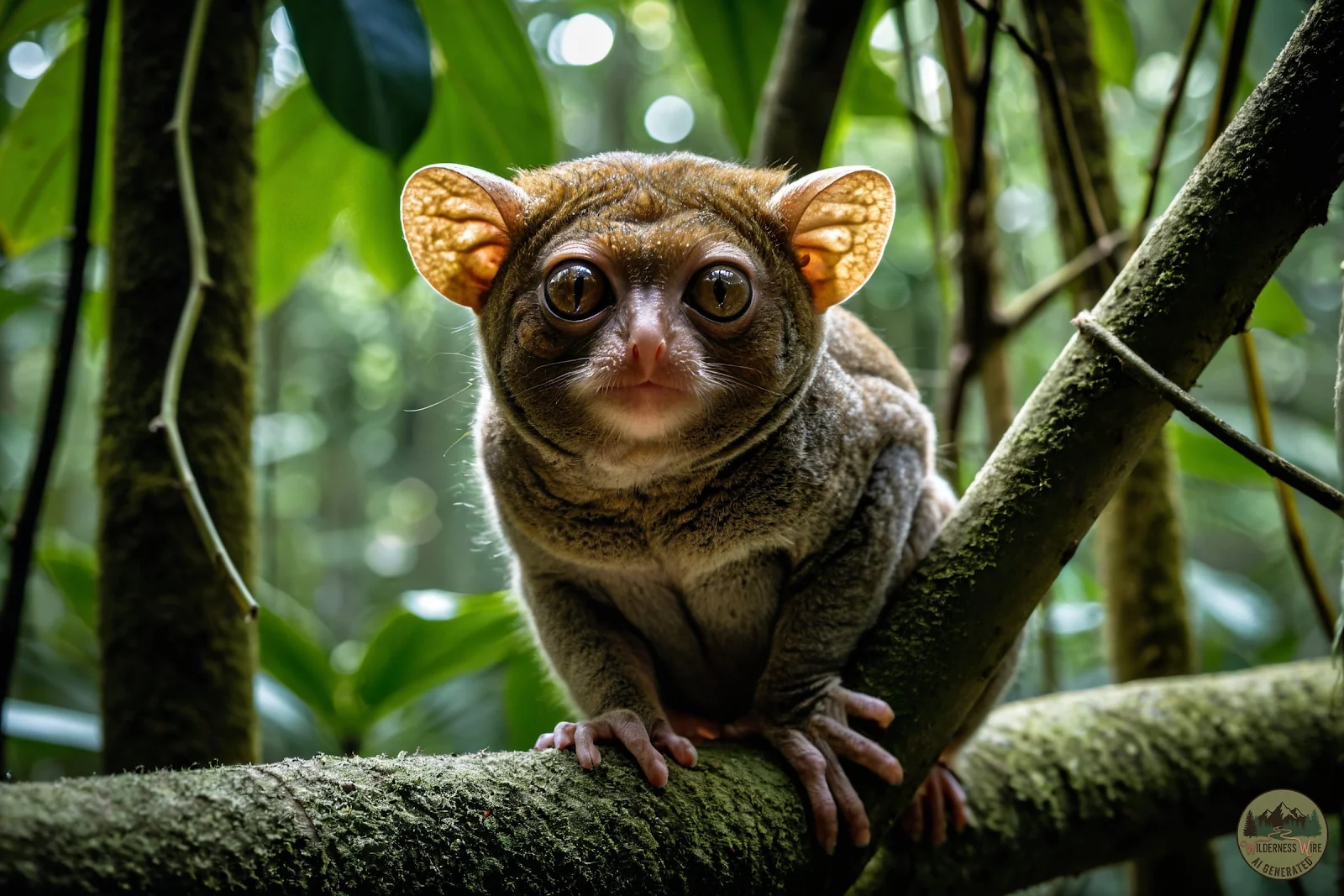
At first glance, the most striking feature of the tarsier is undoubtedly its eyes. Proportionally, the tarsier has the largest eyes of any mammal relative to its body size. Each eyeball is approximately 16 millimeters in diameter, which is roughly the same size as its entire brain. This anatomical extreme is a direct result of the tarsier’s nocturnal lifestyle. Unlike many other nocturnal animals, such as cats or lemurs, tarsiers lack a tapetum lucidum—the reflective layer behind the retina that enhances night vision by giving light a second chance to be absorbed. To compensate for this lack of "eye shine," the tarsier evolved massive pupils and an enormous retinal surface area to capture every available photon of moonlight or starlight. However, these massive eyes are so large that they are fixed within their sockets, meaning the tarsier cannot roll its eyes to look around. To solve this, nature provided a specialized neck vertebrae arrangement that allows the tarsier to rotate its head a full 180 degrees in either direction, much like an owl.
The name "tarsier" is derived from the animal's elongated tarsal, or ankle, bones. This specialization is the key to their extraordinary locomotor abilities. Tarsiers are vertical clingers and leapers, capable of jumping distances of up to 40 times their own body length. When navigating the dense undergrowth of the rainforest, they do not climb in the traditional sense; instead, they propel themselves from one vertical trunk to another with explosive power. Their fingers and toes are also highly specialized, ending in expanded, disk-like pads that provide exceptional grip on smooth or wet bark. Except for the second and third toes of the hind feet, which bear grooming claws, their digits have flattened nails similar to those of anthropoid primates.
While most primates are omnivorous or herbivorous, the tarsier holds the distinction of being the only entirely carnivorous primate in existence. Their diet consists primarily of insects, such as crickets, grasshoppers, and beetles, but they are also known to hunt small vertebrates including lizards, frogs, and even small birds or bats in flight. Their hunting strategy relies on stealth and precision. Using their acute hearing—facilitated by large, mobile, and membranous ears that are constantly twitching to localize sound—the tarsier pinpoints the exact location of its prey in complete darkness. Once the target is identified, the tarsier launches itself with surgical accuracy, pinning the prey down with its front hands before delivering a fatal bite.
The social lives of tarsiers vary significantly between species. For instance, the Philippine tarsier tends to be more solitary, while the spectral tarsiers of Sulawesi often live in small family groups consisting of a mated pair and their offspring. Communication within these groups is sophisticated and often occurs at frequencies beyond the range of human hearing. Research has revealed that tarsiers use ultrasonic vocalizations to communicate with one another, a trait that likely evolved as a "stealth" frequency. By communicating in the ultrasonic range, tarsiers can coordinate with one another or warn of predators without alerting the various birds and snakes that might be listening for a meal. This hidden language adds a layer of complexity to their survival strategy in the competitive environment of the tropical rainforest.
Reproduction in tarsiers is characterized by a high degree of maternal investment. After a gestation period of about six months—unusually long for a mammal of its size—the female gives birth to a single, well-developed infant. Tarsier infants are born with their eyes open and are capable of climbing within a day of birth. Despite this early development, the mother carries the infant in her mouth or leaves it parked on a branch while she hunts nearby. This period of vulnerability is a critical time for the survival of the species, as the young are susceptible to predation by arboreal snakes and owls.
Unfortunately, the future of these remarkable primates is precarious. Habitat loss remains the primary threat, as the lowland rainforests they inhabit are cleared for agriculture, mining, and timber. Furthermore, tarsiers are notoriously sensitive to human interference. They are high-stress animals that do not thrive in captivity; when placed in cages or subjected to loud noises and bright lights from tourism, they have been known to injure themselves or die from the sheer stress of the environment. Conservation efforts are now focusing on community-based initiatives and the protection of large, contiguous blocks of forest to ensure that the tarsier can continue its 50-million-year-old legacy. Protecting the tarsier is not just about saving a single species; it is about preserving a unique branch of the primate family tree that offers invaluable insights into our own evolutionary history.